Generator Bajek
Powered by the Portable Animator engine
Portable Animator is a lightweight animation and scene-synthesis engine. Generator Bajek is its flagship, finished application that puts these capabilities into practice.
All inference runs LOCALLY.
User Interface
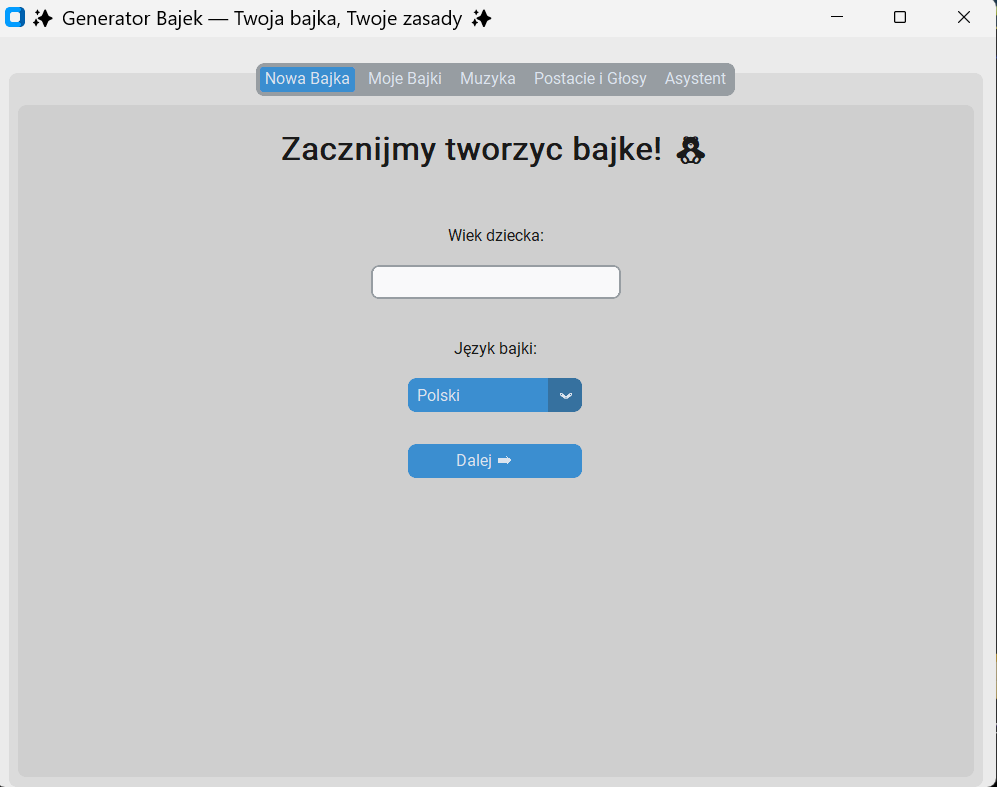
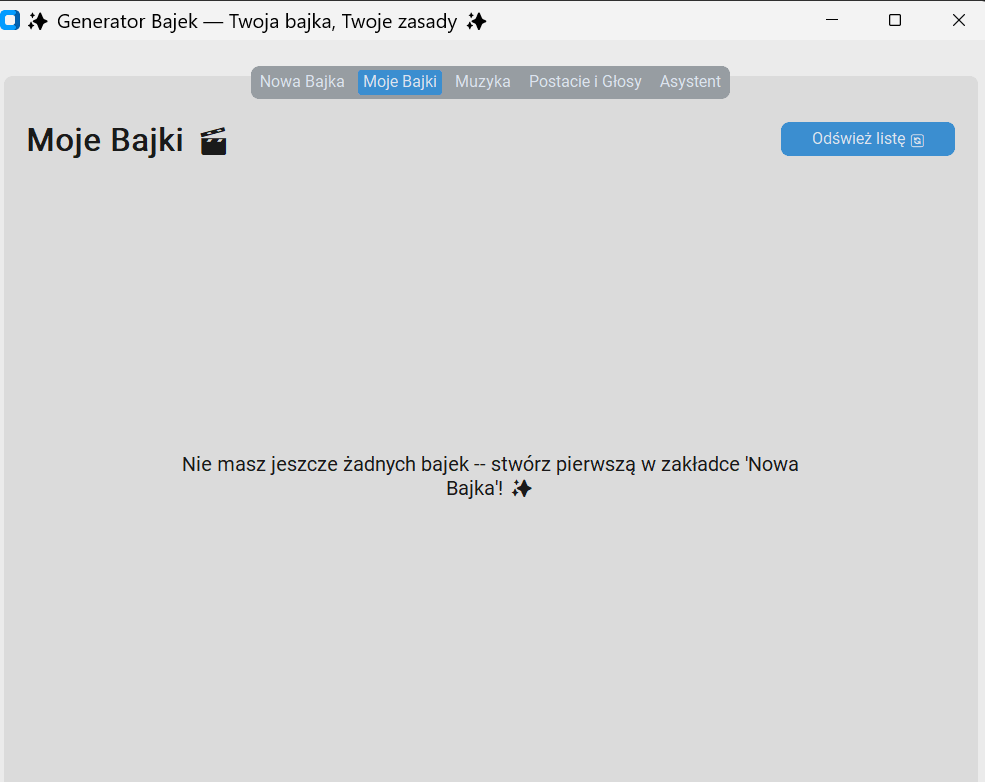
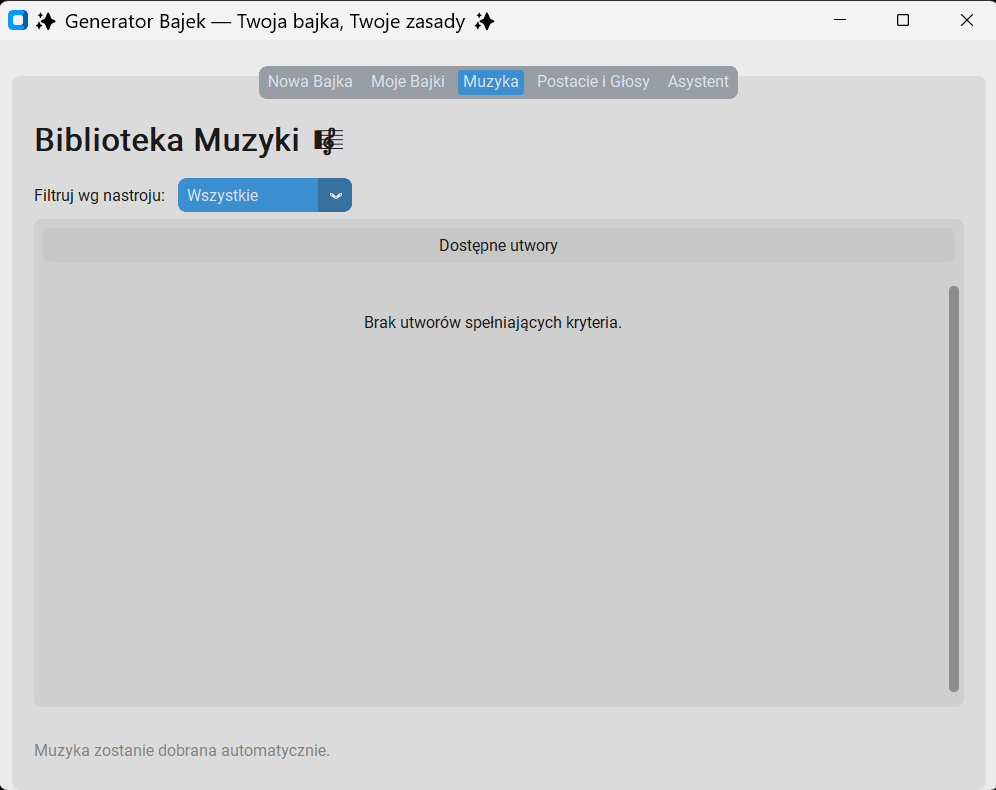
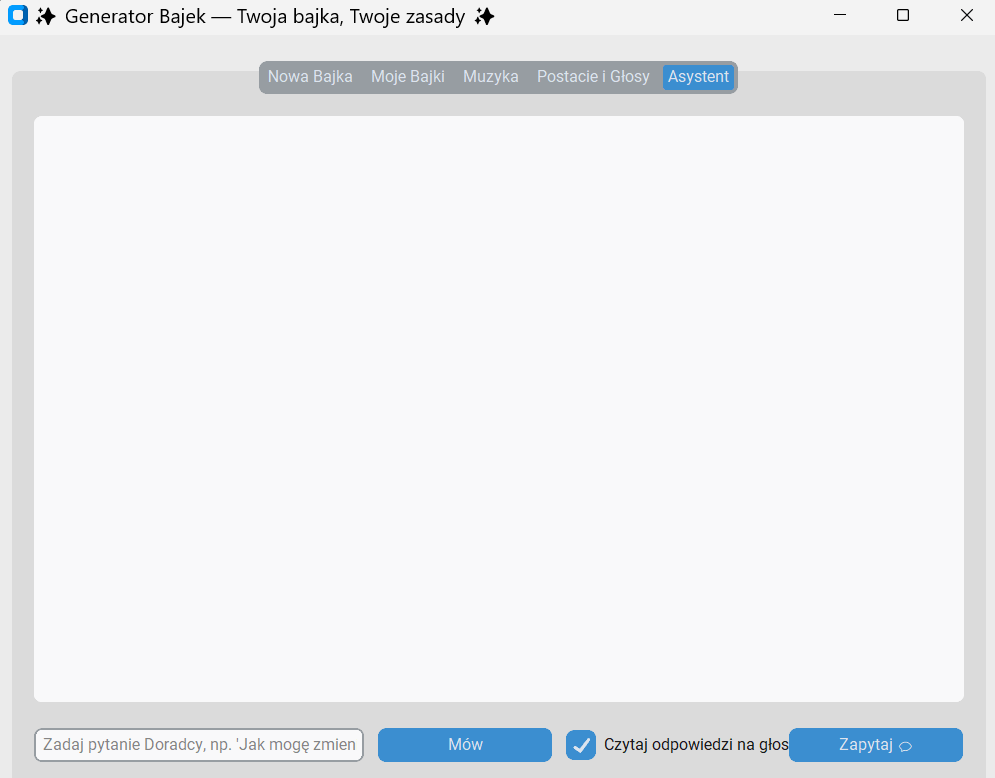
The screenshots below come from the running desktop application.
Interactive Demo — Skeletal Playback
This is an illustrative demo, not the production pipeline.
A 2D canvas renders a scene graph: a JSON document describes a
2D character skeleton (root, hips, torso, neck, head, arms, legs) where
every bone inherits its parent's transform. Two keyframe clips
(Idle and Run cycle) are interpolated with a
Catmull–Rom spline inside a requestAnimationFrame
loop. It is fully deterministic: the same scrubber position always gives
the same pose. Nothing here generates images or speech, and no model is
called — the skeleton and keyframes are illustrative sample data,
not an export from a real project. The actual rendering, TTS and video
assembly run locally in the desktop application, not in this page.
—
Pipeline Architecture
- Text advisor: local GGUF language model (2.2 GB on disk)
- Image generation: SD-Turbo, local inference, 4.9 GB safetensors weights
- Speech recognition (STT): offline model
- Speech synthesis (TTS): local voices
- Frame orchestration and video assembly: frames and the audio track are joined locally into a single file with moviepy (H.264/AAC, 24 fps)
Roadmap
The Scene DAG above is a specification today, not implemented code -- see the full roadmap and current status on the project roadmap.